
Tramadol Use and Abuse among Undergraduate Students at a Tertiary Institution in Southern Nigeria
Article Sidebar
Main Article Content
Abstract
Tramadol is a centrally acting analgesic of the opioid family which has become a substance of public and social concern globally due to the increasing population of users and abusers, the latter enticed by the euphoric and mood-enhancing effects. This study aimed to determine the knowledge, attitude, and practice towards tramadol use and abuse among undergraduate students at the University of Port Harcourt.
Methodology.
This descriptive cross-sectional study was conducted amongst 212 undergraduate students recruited via a multistage sampling method from six faculties in the university. Data was collected using a structured self-administered questionnaire and analysed with Statistical Package for the Social Sciences.
Results.
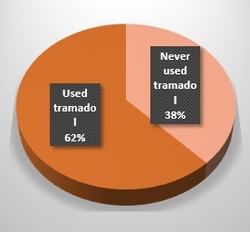
The mean age of the respondents was 23.0±3.8years and 138(65.1%) were males. All the respondents had prior knowledge of tramadol, 97(45.8%) persons first heard of it at adolescence, 28(11.2%) report that it can be used for sexual enhancement, and 74(34.9%) believe tramadol can be combined with other recreational substances, especially alcohol. The prevalence of tramadol use was 62.1% (128 persons), of which 63(49.2%) first used it during adolescence. Of the tramadol users, 117(91.4%) students enjoyed using tramadol and 127(99.2%) will recommend it to a friend.
Conclusion.
Almost two thirds of the undergraduate study population had used tramadol with the first exposure occurring in adolescence. Fact-based and accurate continuous education of the public, with emphasis on teenagers by trained educators and health professionals is essential to control misuse of tramadol.
Downloads
Article Details
Section

This work is licensed under a Creative Commons Attribution-NonCommercial-ShareAlike 4.0 International License.
Articles are published under the Creative Commons Attribution License (CC BY 4.0) which permits unrestricted use, distribution, and reproduction provided the original work is cited.
How to Cite
References
1. Grond S, Sablotzki A. Clinical pharmacology of tramadol. Clin Pharmacokinet. 2004;43(13):879–923. doi:10.2165/00003088-200443130-00004
2. Doostmohammadi M, Rahimi HR. ADME and toxicity considerations for tramadol: from basic research to clinical implications. Expert Opin Drug Metab Toxicol. 2020;16(7):627–640. doi:10.1080/17425255.2020.1776700
3. Miotto K, Cho AK, Khalil MA, Blanco K, Sasaki JD, Rawson R. Trends in Tramadol: Pharmacology, Metabolism, and Misuse. Anesth Analg. 2017;124(1):44–51. doi:10.1213/ANE.0000000000001683
4. Beakley BD, Kaye AM, Kaye AD. Tramadol, Pharmacology, Side Effects, and Serotonin Syndrome: A Review. Pain Physician. 2015;18(4):395-400.
5. Subedi R, Bajaj S, Kumar MS, May GW. Tramadol. In: StatPearls [Internet]. Treasure Island (FL): StatPearls Publishing; 2024 [cited 2026 May 19]. Available from: nih.gov
6. Smith SM, Dart RC, Katz NP, et al. Classification and definition of misuse, abuse, and related events in clinical trials: ACTTION systematic review and recommendations. Pain. 2013;154(11):2287-2296. doi:10.1016/j.pain.2013.05.053
7. National Drug Enforcement Agency. Death related to drug poisoning in Nigeria [Internet]. Abuja: NDLEA; 2012 [cited 2025 Nov 29]. Available from: http://www.ndlea.gov.ng/v1/?q=content/world-drug-report-2014-nigeria-records-highest-cannabis-seizure-africa-/
8. Ibrahim AW, Yusuph H, Megafu O, Vesta C. Tramadol abuse among patients attending addiction clinic in North-eastern Nigeria; outcome of a four year retrospective study. Pharmaco-biochem Behav. 1996;53(3):279–286.
9. World Health Organization. Adolescent health [Internet]. Geneva: World Health Organization; 2025 Nov 19 [cited 2026 May 22]. Available from: https://www.who.int/health-topics/adolescent-health
10. Banati P, Vedechkina M, De Rubeis V, et al. Adolescent experiences and exposures: a systematic review of life course outcomes. EClinicalMedicine. 2025;88:103453. doi:10.1016/j.eclinm.2025.103453
11. Safo Oduro M, Adeleye KK, Agyemang-Duah W, Peprah P. Substance Use and Risky Sexual Behavior Among Adolescents: A Cross-National Clustered Analysis of 35 European and North American Countries. Int J Sex Health. 2025;37(2):284-296. doi:10.1080/19317611.2025.2471800
12. Jatau AI, Sha'aban A, Gulma KA, et al. The Burden of Drug Abuse in Nigeria: A Scoping Review of Epidemiological Studies and Drug Laws. Public Health Rev. 2021;42:1603960. doi:10.3389/phrs.2021.1603960
13. Makanjuola AB, Daramola TO, Obembe AO. Psychoactive substance use among medical students in a Nigerian university. World Psychiatry. 2007;6(2):112-114.
14. Naguib YM, Sherif HA, Elbalshy AT, et al. Prevalence and associated risk factors of cannabinoid abuse among Egyptian university students: a cross-sectional study. Environ Sci Pollut Res Int. 2021;28(48):68706-68716. doi:10.1007/s11356-021-15412-1
15. Ferreira de Lemos P, Fidalgo Maia R. Serotonin Syndrome With Concomitant Antidepressant and Tramadol: A Case Report. Cureus. 2025;17(1):e76968. doi:10.7759/cureus.76968
16. Bassiony MM, Salah El-Deen GM, Yousef U, et al. Adolescent tramadol use and abuse in Egypt. Am J Drug Alcohol Abuse. 2015;41(3):206-211. doi:10.3109/00952990.2015.1014959
17. Lasong J, Salifu Y, Kakungu JAWM. Prevalence and factors associated with tramadol use among university students in Ghana: a cross-sectional survey. BMC Psychiatry. 2024;24(1):853. doi:10.1186/s12888-024-06230-z
18. Boun SS, Omonaiye O, Yaya S. Prevalence and health consequences of nonmedical use of tramadol in Africa: A systematic scoping review. PLOS Glob Public Health. 2024;4(1):e0002784. doi:10.1371/journal.pgph.0002784
19. Kolawole TO, Ogunyemi AO, Lucas AR. Prevalence of substance use and knowledge of its effects among secondary school students in Lagos, Nigeria. S Afr J Psychiatr. 2025;31:2370. doi:10.4102/sajpsychiatry.v31i0.2370
20. Olanrewaju JA, Hamzat EO, Enya JI, et al. An assessment of drug and substance abuse prevalence: a cross-sectional study among undergraduates in selected southwestern universities in Nigeria. J Int Med Res. 2022;50(10):3000605221130039. doi:10.1177/03000605221130039
21. Legasse AS, Tamiru W, Mohammed F, Ataro G. The prevalence of Tramadol abuse and associated factors among Hawassa University students, Hawassa, Ethiopia. PLoS One. 2025;20(3):e0318634. doi:10.1371/journal.pone.0318634
22. Strickland JC, Smith MA. The effects of social contact on drug use: behavioral mechanisms controlling drug intake. Exp Clin Psychopharmacol. 2014;22(1):23-34. doi:10.1037/a0034669
23. Spohr SA, Livingston MD, Taxman FS, Walters ST. What's the influence of social interactions on substance use and treatment initiation? A prospective analysis among substance-using probationers. Addict Behav. 2019;89:143-150. doi:10.1016/j.addbeh.2018.09.036
24. Mohamed NR, El Hamrawy L, Shalaby A, El Bahy M, Abd Allah M. An epidemiological study of tramadol HCl dependence in an outpatient addiction clinic at Heliopolis Psychiatric Hospital. Menoufia Med J. 2015 Jul;28(3):591-596. Available from: https://ajfm.journals.ekb.eg/article_104108_566dd0b8e06a5ac310c0d566de533cc0.pdf
25. Wang SQ, Li CS, Song YG. Multiply organ dysfunction syndrome due to tramadol intoxication alone. Am J Emerg Med. 2009;27(7):903.e5-903.e7. doi:10.1016/j.ajem.2008.11.013
26. Ismail MIM, Almardi MOJ, Jabir MMA, Brair SL, Bashir IA, Abdalla MA, Hammad AY. A Study on the Attitude, Abuse and Addiction to Tramadol Among Sudanese University Students in Khartoum State, Sudan. Int Neuropsychiatr Dis J. 2024;21(2):1–13. doi:10.9734/indj/2024/v21i2422
27. Sharma AP, Sharma G, Tyagi S, et al. Safety and efficacy of "on-demand" tramadol in patients with premature ejaculation: an updated meta-analysis. Int Braz J Urol. 2021;47(5):921-934. doi:10.1590/S1677-5538.IBJU.2020.0561
28. Martyn-St James M, Cooper K, Kaltenthaler E, et al. Tramadol for premature ejaculation: a systematic review and meta-analysis. BMC Urol. 2015;15:6. doi:10.1186/1471-2490-15-6
29. Ugwu UT. Cannabis swap: gender and tramadol use among Nigerian university students. J Humanit Appl Soc Sci. 2023 Dec;6(4):345-356.
30. Babalola E, Akinhanmi A, Ogunwale A. Who guards the guards: drug use pattern among medical students in a nigerian university. Ann Med Health Sci Res. 2014;4(3):397-403. doi:10.4103/2141-9248.133467
31. Heckman CJ, Dykstra JL, Collins BN. Substance-Related Knowledge, Attitude, and Behavior among College Students: Opportunities for Health Education. Health Educ J. 2011;70(4):383-399. doi:10.1177/0017896910379694
32. Yeung C, Kiss A, Rehou S, Shahrokhi S. Prescribing patterns of opioids and adjunctive analgesics for patients with burn injuries. Burns. 2021;47(4):776-784. doi:10.1016/j.burns.2020.09.009
33. Todd KH, Ducharme J, Choiniere M, et al. Pain in the emergency department: results of the pain and emergency medicine initiative (PEMI) multicenter study. J Pain. 2007;8(6):460-466. doi:10.1016/j.jpain.2006.12.005
34. Crummy EA, O’Neal TJ, Baskin BM, Ferguson SM. One is not enough: Understanding and modeling polysubstance use. Front Neurosci. 2020;14:569. doi:10.3389/fnins.2020.00569
35. Connor JP, Gullo MJ, White A, Kelly AB. Polysubstance use: Diagnostic challenges, patterns of use and health. Curr Opin Psychiatry. 2014;27(4):269–275. doi:10.1097/YCO.0000000000000069
36. Khosrojerdi H, Talesh GA, Danaei GH, Saremi SS, Adab A, Afshari R. Tramadol half-life is dose dependent in overdose. DARU J Pharm Sci. 2015;23(1):22. doi:10.1186/s40199-015-0104-y